
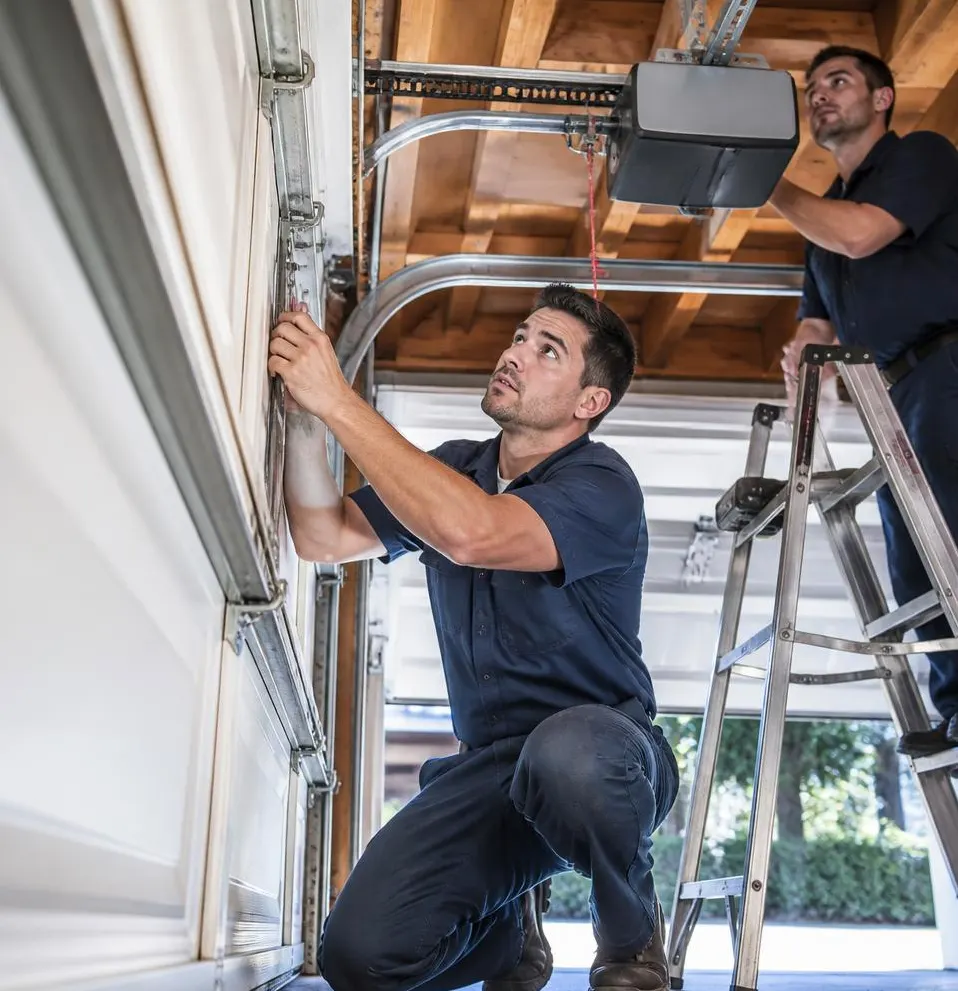
The Argument Usually Starts in the Garage Itself
It's July, the garage door has been baking in the sun all afternoon, and you walk in to grab something from the freezer. The air feels thick and hot, maybe ten or fifteen degrees warmer than the driveway. One of you says, \"We need an insulated door, this is ridiculous.\" The other says, \"It's a garage, not a bedroom, why are we spending extra money to insulate a box for the lawnmower?\" Both of you are a little bit right, and the answer depends on details neither of you has actually talked through yet.
What R-Value Is Actually Measuring
R-value measures resistance to heat transfer. A higher number means the door panel is slower to let outside temperature extremes pass through to the inside. Insulated garage doors get their R-value from a layer of polystyrene or polyurethane foam sandwiched between steel skins, instead of a single layer of hollow steel.
What R-value does not do is keep your garage at room temperature. It slows down temperature swings and reduces how much heat (or cold) transfers through the door itself. That distinction matters a lot for the argument you're having.
Who Actually Benefits
- Attached garages, especially with a room above or beside them. If there's a bedroom, bonus room, or home office sharing a wall or ceiling with the garage, an uninsulated door lets that garage act like a radiator, pushing summer heat and winter chill straight into your living space. Insulation here is not cosmetic — it changes how hard your HVAC has to work in the adjacent rooms.
- Anyone using the garage as a workshop, gym, or hangout space. If you spend real time out there, the difference between a single-layer steel door and an insulated one is the difference between a space you can use for a few hours in August versus one you avoid until October.
- Houses that catch full sun on the door for most of the afternoon. Inland Roseville summers push panel surface temperatures well above ambient air temperature. An uninsulated steel door absorbs and re-radiates that heat into the garage all evening. Insulated doors cool down faster once the sun moves off them.
- Homes near louder streets. This isn't about temperature, but it's worth mentioning: the foam core in insulated doors also dampens sound and road noise, which matters if the garage sits close to the street or a shared wall.
Who Is Paying for Nothing
- Detached garages used purely for storage or parking, with no living space nearby and no plans to spend time out there, get very little practical benefit from R-value. You're paying a premium for a feature that doesn't change anything you actually experience.
- Garages that already have insulated walls and ceiling but an uninsulated door see a smaller return than you'd expect, because heat and cold still move freely through the one uninsulated surface — the door — while everything else is already managing extremes fine. In that case, the spouse pushing for the insulated door is addressing a real problem, but it might be a bigger fix than just the door.
- Anyone expecting insulation to fix humidity or condensation problems. Insulated doors reduce temperature swings, which can reduce condensation somewhat, but they don't solve a moisture or ventilation problem on their own. If condensation is the actual complaint, that's a different conversation.
The Trade-Offs Nobody Mentions in the Showroom
Insulated doors tend to be heavier, which means they usually need a stronger opener and properly sized springs to lift them without strain. If you're replacing an old non-insulated door with an insulated one, factor that into the job — it's not just a panel swap.
They're also more expensive. As a rough national range, insulated steel doors typically run noticeably higher than comparable non-insulated models, though the exact jump depends on size, R-value rating, and finish. That's a real cost that should be weighed against how much time is actually spent in or next to the garage.
On the upside, insulated doors are usually more rigid and dent-resistant because of the foam core bonded between steel layers, which is a genuine side benefit independent of temperature — worth factoring in if the door takes the occasional bump from a bike, trash can, or car bumper.
How Roseville's Climate Tips the Scale
Hot inland summers mean the sun-exposure argument is real here, not theoretical. A door facing west or south that bakes all afternoon will show a bigger before-and-after with insulation than one that sits in shade most of the day. Winter rain and the occasional cold snap matter less for insulation value here than they do in harsher climates, but dry-season dust and wildfire smoke are a separate reason to care about door seals and weatherstripping, insulated or not — a tight seal keeps particulate air out regardless of the panel's R-value.
When to Call Roseville Garage Door
If you're trying to decide whether an insulated door is worth it for your specific garage, that's worth a conversation rather than a guess. We can look at your garage's orientation, what's attached to it, and your current opener and spring setup before recommending anything. If insulation makes sense, our Garage Door Installation service includes sizing the right opener and springs for the added weight, so you're not left with a heavy new door straining an old system. If you're not ready to replace the whole door yet, our Garage Door Maintenance visits can tighten up seals and weatherstripping now, which helps with dust and temperature swings either way.
Settle the argument with real numbers instead of guesses — call Roseville Garage Door and we'll walk your garage with you before you spend a dollar.